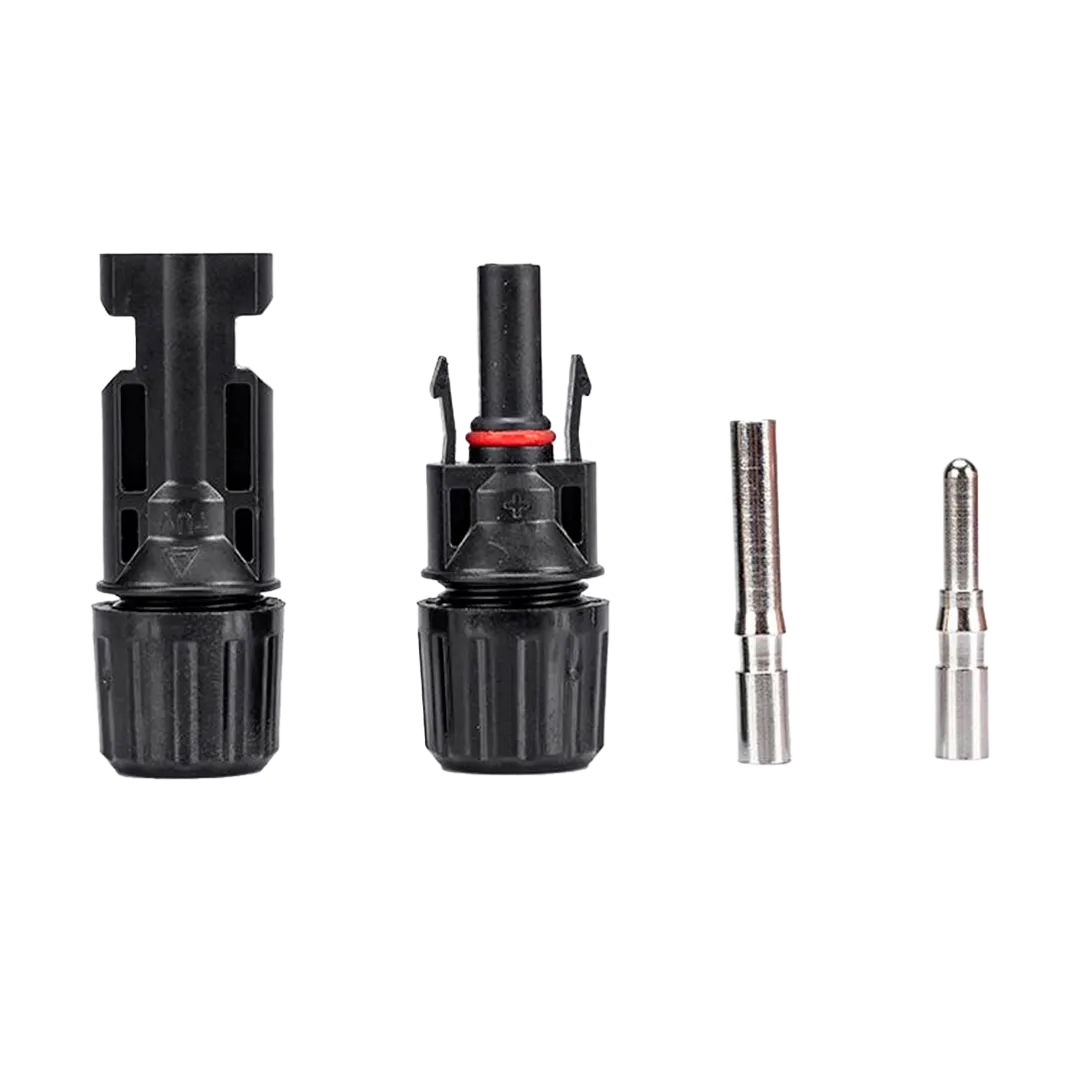
The solar connector — commonly known as the MC4 connector — makes the quick, safe and waterproof link between panels, cables and inverter. Although small, it is a critical item: most failures and hot spots in photovoltaic systems happen at poorly made connections. Using quality connectors and crimping them correctly is essential for safety.
What the MC4 connector is
MC4 is the connector standard used on almost every modern solar panel. It comes in pairs (male and female), locks when mated and seals against water and dust (IP67 or higher). Because it handles high DC voltage and locks mechanically, it provides reliable connections that withstand years of exposure on the roof.
How to use solar connectors safely
For safe connections:
- Use the correct crimping tool to fix the terminal to the cable — a poor crimp creates resistance and heating.
- Respect compatibility: ideally, use connectors of the same brand on both sides of the connection.
- Check the cable cross-section: the connector must suit the solar cable being used.
- Check the lock: the connector should click and lock; test it by pulling gently.
Connectors are part of the same chain as the solar panels, the cables and the protective string box.